Showing posts with label English Poetry. Show all posts

Give it a go... (poem)


Give it a GO...
Give it a go, give it a go- it might have something befitting in store for you,
Give it a go ,give it a go- there might be felicity galore for you.

Always look for a shot, not bothering about the result,
Before jumping into the arena, it is only you whom you should consult.

What shall be your Bourne , now that you have decided,
No point in beating about the bush, you should be self guided.

"What is the thing that you are up to?" This crummy world might interrogate,
But the feeling to succeed in your Endeavour is quite sufficient to motivate.
At par with hard work, there is nothing as a surrogate,
If not today, then tomorrow, your effort the species shall appreciate.
As a personality trait, you should have a sense of humor,
"It is necessary to change yourself for others" is just a rumor.
Never look up to the knavery as a means to lead to fame,
My dear friend! It always becomes a selfish and tawdry game.
Be prepared for the worst, but over uncertainties do not obsess,
For success is not a moment but a continuous and long drawn process.
Whatever you want in life, always feel encouraged to learn,
People might and will surely talk, that should never be your concern.
Each one of us wants to be esteemed, the process may be tedious and slow,
But always remember... Don't stop trying,
Just give it a Go...Give it a Go.

© Literary Jewels

'Closed Path' - a poem by R.N. Tagore

On the occasion of the birth anniversary of Rabindra Nath Tagore that falls on 9th May, I would like to share with my esteemed readers one of his poems.

CLOSED PATH

I thought that my voyage had come to its end
at the last limit of my power,---that the path before me was closed,
that provisions were exhausted
and the time come to take shelter in a silent obscurity.

But I find that thy will knows no end in me.
And when old words die out on the tongue,
new melodies break forth from the heart;
and where the old tracks are lost,
new country is revealed with its wonders.

Rabindranath Tagore What a wonderful piece of poetry! The title 'Closed Path' might be a pointer toward a hint of pessimism because of the word 'closed'. But the poem ends on a very positive note and therein lies the beauty of the poem. The poem moves from pointing towards a hint of pessimism because of the word 'closed'. But the poem ends of a very positive note. The poem is a wonderful moving from the shades of pessimism by assuming that the 'voyage had come to its end' in the first stanza, to a very optimistic one in the second stanza where 'new country is revealed with its wonders'. I hope you enjoy reading this poem. And do share your views about the poem here.

The Dear Departed - 2012

It is 31 December and time to look back at the year gone by. Just as Wordsworth wrote in his Ode to 'Intimations of Immortality from Recollections of Early Childhood': "Another race hath been, and other palms are won", we can say that 'another year has been'. But what next? As I flip the pages of my 2012 Diary, I almost relive all the experiences - some sweet, some sour, a few bitter and some beyond being just sweet. So it had all the shades of grey. After all, life is never black or white!
Mixed Emotions
The bitterness was not all personal but social too as one person is not a detached being, he is a social being and hence, cannot live in water-tight compartments. And it's not either about the gender too! Whenever a rape or molestation case is reported I am affected as a human being first and then as a woman. But my talking of 'human being' and 'humanity' might seem out of place as 'being human' is just fashionable but it's not a practical reality. We 'humans' have a very short term memory. We see, hear, discuss and just as easily forget all things. Candle-light vigils are alright, but have we started to change our mentality or have we tried to change the sick mentality of others. Until and unless we 'the common man' changes no change will be absolute. Being totally dependent on the government to do something will be nothing short of a tragedy. Oh! but why have we deviated into discussing things seriously? We should be preparing for our new year bash! After all, life goes on, isn't it? How does it matter if a person died of inhuman brutality? How can we imagine the plight of the 23-year old's dear ones left behind tormented and shattered? Right?

Everything is a combination of both good and bad, same is true for a year. And for 2012 as well...but at the same what remains with us for a comparatively longer time is how the things end. If something ends on a good note, it leaves an after-taste of gaiety. But this time 2012 does nothing of that sort. The after-taste this time is a very bitter one. It is not just about one case, the point is the crime continues unabated. The ones who should be taking some concrete steps are busy in suggesting a ban on skirts or opposing the death penalty to be included in the Rape law or pressurizing parents for a hushed up cremation in the wee hours. Where will it take things? Nothing much to expect I suppose...

I apologize for having written on this because may be readers would expect something literary on a literary blog. But if a writer is not sensitive, who will be? Kindly ponder over this... "Don't mourn my death, preserve my thinking and carry forward my fight" - that will be the real tribute to the departed soul and the dear departed 2012 too!

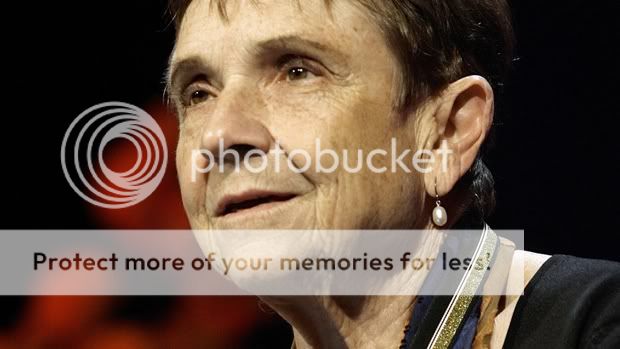
Adrienne Rich, award-winning feminist poet dies at 82

Adrienne Rich (1929 - 2012
 The news of death of Adrienne Rich, an American poet, essayist and feminist, pulled be back to a reading of her works. As I have always said, rather than discussing a writer's biographic facts in detail (which are available at any website or book), it is more important to discuss his/her literary writings. This especially behoves a literary website like Literary Jewels
She died on 27 March, 2012.

A Valediction Forbidding Mourning

My swirling wants. Your frozen lips.
The grammar turned and attacked me.
Themes, written under duress.
Emptiness of the notations.

They gave me a drug that slowed the healing of wounds.

I want you to see this before I leave:
the experience of repetition as death
the failure of criticism to locate the pain
the poster in the bus that said:
my bleeding is under control

A red plant in a cemetary of plastic wreaths.

A last attempt: the language is a dialect called metaphor.
These images go unglossed: hair, glacier, flashlight.
When I think of a landscape I am thinking of a time.
When I talk of taking a trip I mean forever.
I could say: those mountains have a meaning
but further than that I could not say.

To do something very common, in my own way.


NOTE: Submit your viewpoints about the poem. Let's start a literary discussion...Keep watching this space for more insights into this writing and much more...

GRAND STYLE AND DICTION OF 'PARADISE LOST'


“Forms and figures of speech originally the offspring of passion, but now the adopted children of power”.
COLERIDGE

INTRODUCTION
‘Paradise Lost’ was for Milton the fulfillment of a long cherished ambition. He had resolved that his ‘adventurous song’ intended to ‘soar with no middle flight’. Accordingly, after much deliberations he chose the epic form and a theme equally sublime. Milton himself tells us in Book IX that he could rise to the demands of his ‘sad task’ only.
‘If answerable style I can obtain
Of my careful celestial patroness.’
This ‘answerable style’ demanded a verse which admitted of dignity and flexibility and an ability to rise to the sublime heights. And no responsive readers of ‘Paradise Lost’ can fail to notice that Milton indeed did obtain such a style.

MILTON – THE INNOVATOR
According to Hamford, “Milton of all English writers is the greatest innovator in the matter of expression. It is not merely that forged out of various materials. It is marked by bold departures from English literary usage of his own or of any time. And yet it is this uniqueness of Milton’s style, its remoteness from ordinary English that has aroused a fierce controversy. If it is has found its admirers like M.Patilson, Bagehot, Saintsbury, Raleigh and in our own time C.S. Lewis, B.Rajan, Frank Kermod and L.Smith; the anti-Miltonians too are a formidable array – Ezra Pound, Middleton Murry, Herbert Reid, B. Debree and T.S. Eliot. Obviously, the best course would be to depend upon one’s own response.

INVOCATION
The very opening of the poem, the invocation reveals the grandeur of Milton’s style. It begins with a ‘syntactical leap’ by which we are kept suspended for thirty-six words without a verb. And even when we arrive at the word ‘sing’, we are once more deflected into a maze of subordinate clauses and phrases. Even at the full stop after ‘rhyme’ (line sixteenth) there is hardly any respite and the whole invocation really forms a single continuous statement. In fact, it can be looked upon as a ‘capsule summary’ not only of the theme and action of the whole poem but also of the most salient features of Milton’s grand style. This style is human for its unusual syntax, its exalted language and diction, rich allusions, remarkable epic-similes, formidable erudition and skilful handling of blank-verse.


LANGUAGE
Milton’s style has been called ‘grand style’ because it has always an unmistakable stamp of majesty in it. Milton’s language is not the language of ordinary life. His diction is grand and majestic and his language has a force and spontaneity of its own. He uses a lot of Latin words. He borrows words from Latin and employs them in his language in a befitting manner. He creates a language and diction which quite appropriate to his theme. The Miltonic diction follows the ancient models. Similes and metaphors abound; with the result that the impression that is left on our minds after reading his poetry is that of grandeur, majesty and dignity.
We can describe Milton’s grand style in the words of Matthew Arnold, who says, “In the sure and flawless perfection of his rhythm and diction, he is as admirable as Virgil or Dante, and in this respect he is unique amongst us. None else in English literature possesses the like distinction.” It is sometimes said that the language of ‘Paradise Lost’ is ‘no language’. But in the art of literature one often comes across several instances where the literary language is no spoken language. The Euphism of Lyly is one of the best examples. So is the prose of Milton. So too is the poetical vehicle of Milton. It is an artificial language but it is not the artifice of bombast.

VOCABULARY
The diction of Milton’s epic is a thing composed of many elements – all tending to result in a rich and varied medium. Milton’s vocabulary contains a large proportion of Latinized words such as ‘untamed reluctance’, ‘horrid here’, ‘prodigious’, ‘officious’ etc. Often Milton uses words in their Latin sense or sometimes in senses which have become obsolete. The best example is ‘influence’, which Milton uses in its old astrological sense of suitable fluid from the stars and planets, which was supposed to exorcise plants. Instances of this use are innumerable.

MILTON’S PECULARITIES
Milton prefers the Italian forms of words to forms of a French character such as ‘sovereignty’. Among other qualities of Milton’s style are his peculiar use of the Latin idiomatic participle construction (for example, the loss thus far recovered), the use of Nominative Absolute (for example, ‘I extinct’ meaning ‘I being extinct’); the use of past participle, the use of transitive verbs intransitively and vice-versa. Among other peculiarities of Milton’s diction is the use of adjectives as nouns, as ‘our stronger’ in the sense of ‘he who is stronger than us; a love for conciseness that compels Milton to compress the maximum meaning into few words in a characteristic passion with Milton. Milton is also famous for ‘Inversions’. For instance, take the sentence: “Where to with speedy words the archfiend replied”. Without inversion this sentence would read as: “The archfiend replied to this with speedy words”.

SIMILES AND METAPHORS
Among figures of similitude, of course, the simile and the metaphor abound, example of which stare up from every page.
In search of really remarkable comparisons he borrows from myth, legend, History, Science and travel and of course from contemporary events. And though sometimes, his similes seem to be carried away by prolific imagination, they have a definite purpose. In most cases they offer a changed perspective and are suggestive of Milton’s own attitude. For instance, Satan is at first depicted as of gigantic proportions. He is likened to the huge sea-beast Leviathan who may be mistaken for an island by the Pilot of “some small night-founded skiff”. But while this suggests Satan’s unusual dimensions Milton also implies the danger of taking shelter in Satan’s treacherous protection. Similarly Satan’s ‘ponderous’ shield is like the moon that Galileo scans through his ‘Optic glass’, his spear is like the mast of the ship, ‘shaped out of tallest pine’ growing on Norwegian heights’ what we are made to feel is Satan’s eye view. Yet a little later Satan and his crew are compared to ‘at Pygmian Race’ and to ‘autumnal leaves that strew the books in Vallambrose’.
Like dead leaves; these fallen angels are forever cut off from their source of life.

USE OF PATHETIC FALLACY
We must also refer to Milton’s use of the Pathetic Fallacy. It is an old device in poetry by which a poet attributes the feelings of living beings to inanimate things. In Paradise Lost, Book IX (782-784), for example, universal nature is represented as feeling a death-wound in the impending fall of Man at the moment when Eve eats the forbidden fruit:
“Earth felt the wound, and Nature from her seat
Sighing through all her works, gave signs of woe.
That all was lost.”
These are the various ways in which Milton uses the English language in poetry. He works magic with the language, distorts it in the way he likes, uses foreign idiom in an excellent manner and handles the language like a linguistic wizard.

VERBAL MELODY
There is an important characteristic yet to be mentioned – the solemn grandeur of his verbal melody. This melody is in consonance with general atmosphere of the poem – a mood of awe and majesty and sublimity. Milton’s style has been called the grand style as there is grandeur in his music and in his description. Milton chooses his words for the sake of their sound effect.
“farewell happy fields,
Where Joy forever dwells. Hail Horrors hail,
Infernal world and thou profoundest hell,
Receive thy new possessor, one who brings,
A mind not to be changed by place or time,
The mind is its place and itself,
Can make a heaven of hell, a hell of heaven.”

STYLE UNIFORM OR NOT
Infact, most of the critics who decry Milton’s style seem to suppose that Milton wrote a uniform style throughout. But as Pope has pointed out ‘Paradise Lost’ has not one but various styles, an ‘Infernal style’, a ‘celestial style’ and ‘style of Paradise’ before and after the fall. In any case the more acceptable view is that of C.S. Lewis, B. Rajan, Douglas Bush and E.M.W. Tillyard – that the sublimity of Milton’s style was necessitated by genre – that is by the epic form in which the style had to be dignified, ritualistic and formal. It was Milton’s great achievement that he attained this sublimity without sacrificing the intensity of an impassioned personal commitment.

CONCLUSION
In reading ‘Paradise Lost’ one has a feeling of vastness. One floats under illimitable sky brimmed with sunshine or hung with constellation. The abyss of space appears to be somewhere about as one hears the cadenced surge of an unseen ocean. In loftiness of thought, splendid dignity of expression and rhythmic felicities, Milton has few peers, no superior. In ‘Paradise Lost’ Milton has invented a type of poem, the divine epic superior to anything in antiquity.

Before the beginning of years....(Swinburne)


A.C. Swinburne (1837-1909), a famous English poet, was known for his works like: ‘Atalanta in Claydon’ (1865), Poems and Ballads I (1866), Songs Before Sunrise (1871), ‘Poems and Ballads II (1878), ‘Tristram of Lyonesse’ (1882), ‘Poems and Ballads III’ (1889) and the novel ‘Lesbia Brandon (published posthumously). But my purpose is not to quote his biographical details. I wished to share an extract from Swinburne’s famous ‘Atalanta in Claydon’. The following are the lines mouthed by the Chorus:
“BEFORE the beginning of years
There came to the making of man
Time, with a gift of tears;
Grief, with a glass that ran;
Pleasure, with pain for leaven;
Summer, with flowers that fell;
Remembrance fallen from heaven,
And madness risen from hell;
Strength without hands to smite;
Love that endures for a breath;
Night, the shadow of light,
And life, the shadow of death.
And the high gods took in hand
Fire, and the falling of tears,
And a measure of sliding sand
From under the feet of the years;
And froth and drift of the sea;
And dust of the labouring earth;
And bodies of things to be
In the houses of death and of birth...”

Wonderful!!! Loved every word of it! How truly the poet has depicted the philosophy of life, the short-lived nature of all goodies of life. We are here on this Earth for a while – and to balance and counter-balance all the pleasant things and bounties that life offers us. The poet mentions time and tears, pleasure and pain, summer with falling flowers, life with the shadow of death…and so on.
The depth of thought makes the lines all the more beautiful. It is the profoundness of thought and emotions that endeared me to this verse. I do hope you enjoy going through these lines and let us all attempt to interpret in a better way.

Happy Republic Day!


Where the mind is without fear and the head is held high;
Where knowledge is free;
Where the world has not been broken up
into fragments by narrow domestic walls;
Where words come out from the depth of truth;
Where tireless striving stretches its arms towards perfection;
Where the clear stream of reason
has not lost its way into the dreary desert sand of dead habit;
Where the mind is led forward by thee into ever-widening thought and action---
Into that heaven of freedom, my Father, let my country awake.

RABINDRANATH TAGORE

HAPPY REPUBLIC DAY with a prayer that the above said turns out to be true very soon!

Blake's Symbolism

Symbolism is a mode of expression in which a writer depicts indirectly through the medium of another object. But symbolism is not a mere substitution of one object for another. There is much more to it. Symbolism is the art of evoking an object little by little to r veal a mood or emotion or some mysterious region of human psyche. However, this is only one aspect of symbolism and it may be called the personal aspect on the human plane. The other aspect is transcendental – that is, using objects to symbolize a vast and ideal world of which the real world is merely an imperfect representation. A symbolist is a seer of a prophet who can look beyond the objects of the real world and convey the essence of the ideal world which human mind tries to express.
Blake is one of the greatest symbolist poets of the world. The greatness of his poetry lies in the sweep of his imagination and symbolic dimension it acquires after every fresh reading. Blake is unique because of his ability to communicate beyond immediate context and space. Blake gave the doctrine that “all had originally one language and one religion”. It implies that the similarities between myths, rituals and doctrines of various religions are more significant that their disparities. Blake wants to suggest that a study of comparative religions, morphology of myths, rituals and theology can lead us to a single visionary conception, a vision of the fallen and created world, which has been redeemed by divine sacrifice and is progressing towards regeneration.
By postulating the world of imagination higher than that of reality Blake suggests a way of closing the gap, which is completed by identifying God with human imagination. In ‘The Marriage of Heaven and Hell’ Blake wrote: “Man is All Imagination. God is Man and exists in us and we in Him.” In his creative activity, an artist expresses the creative activity of God; as all men are in God, so all creators are in the creator. The “divine image” and the “human abstract” apart from signifying oneness of man and God, also forms the basis of Blake’s theory of good and evil. Civilization is in more than one sense supernatural and in its evolution and development man’s superiority over nature has been proved. The central symbol in all of Blake’s works is the city. Of all the animals, man is the most maladjusted to Nature, that is why he outdistances the animals and it is the triumph of his imagination that he creates a world of his own dreams.
In his poems Blake does not present ordinary events common men see and understand them, rather describes spiritual events which have to be portrayed symbolically in order to render them intelligible. Blake uses the familiar figures of the Shepherd and the Lamb, which can be easily understood. In ‘Songs of Innocence’ all desires are innocent, even discipline is innocent and is a source of happiness. Describing innocence in his poem ‘Holy Thursday’ Blake writes:
“’T was on Holy Thursday, their
Innocent faces clean
The children walking two
and two, in red and blue and green.

Mercy and kindness in human relationships not only make for emotional, spiritual and moral health of society but also abstract representations of Divine Will:
“For Mercy has a human heart,
Pity a human face,
And love, the human form divine
And Peace, the human dress.”

It is by now a well established fact that the ‘Lamb’ in Blake’s poems is Christ himself. The word ‘Lamb’ refers to children in his poems. ‘A Lamb’ is a name of affection used by the parents for their children. Symbolically, the Lamb of God is Christ. In his poem ‘The Little Black Boy’ Blake writes: “Around his Golden tent like lambs rejoice”.
It is even clearer in the poem ‘The Lamb’ when he says: “Little Lamb, who made thee?” Apart from using Biblical symbols, Blake also has a system of his own symbols. He uses traditional symbols in a different way. For instance, the lily flower is used by him as a symbol of purity of love and also of naturalness and open-heartedness in love. By sunflower he represents the longing of youth for freedom in love.
Nature plays a different role in Blake’s poems that those of the Romantics. It was Keats (a Romantic poet) who wrote:
“To bend with apples the moss’d cottage trees
To fill each fruit with ripeness to the core.”

The lines having vivid and pictorial imagery have something voluptuously sensuous about it. But Blake is not attracted by ‘God’s plenty’ in ‘Nature’s Paradise’. He once wrote: “Natural objects always did and do now, weaken, deaden and obliterate imagination in me.” He uses the objects of nature so as to symbolize various emotions and moods through them. Blake is not concerned with the outside world but the world within – with mind and imagination. The terror of Nature is unleashed in the image of the tiger. There is a difference between the images of the lion and the tiger. The lion can be turned into a harmless animal while the tiger is not. Blake once wrote that the lion is symbolic of wisdom. The lion in the poem ‘Night’ is a contrast to the tiger of ‘The Tiger’. About tiger Blake writes:
“Tyger, tyger! Burning bright
In the forests of ht night,
What immortal hand or eye
Could frame thy fearful symmetry?”

Blake was against any type of restrictions. That’s why in a large number of poems he condemns authority. For instance, in ‘The Garden of Love’ it is the church, which he criticizes for exercising undue authority. The garden here represents spontaneous natural delight. In ‘The Chimney Sweeper’ (from ‘Songs of Experience’), where Blake talks of the miserable plight of the child (the chimney sweeper), he holds responsible three authorities for the plight – Church, King and Parents. Blake says about the parents of the child:
“And are gone to praise God and His Priest and King
Who make up a Heaven of our misery.”

In another poem ‘The Little School Boy’ it is the school teacher, who represents the cruel authority,
“Under a cruel eye outworn
The little ones spend the day
In sighing and dismay.”

Morton D. Paley in his essay ‘The Tyger of Wrath’ writes: “Blake’s images have meanings which may in part be construed from the internal logic of the poem but which also depend at least in part upon meanings established elsewhere, in Blake’s other poems or in the traditional sources from which he drew. Meaning is affected by context, though not entirely determined by it.

'Boast of Quietness' - Jorge Luis Borges

Kiran Desai begins her Booker winning novel, ‘Inheritance of Loss’ by quoting the following poem by Jorge Luis Borges. He is an Argentine writer and poet. He became blind at the age of fifty due to a hereditary condition. He began his writing career with publication of poems and journal essays. His first collection of poetry was published in 1923. Know more about his life: Jorge Luis Borges

BOAST OF QUIETNESS
Writings of light assault the darkness, more prodigous than meteors.
The tall unknowable city takes over the countryside.
Sure of my life and death, I observe the ambitious
and would like to understand them.
Their day is greedy as a lariat in the air.
Their night is a rest from the rage within steel, quick to attack.
They speak of humanity.
My humanity is in feeling we are all voices of the same poverty.
They speak of homeland.
My homeland is the rythym of a guitar, a few portraits, an old sword,
the willow grove's visible prayer as evening falls.
Time is living me.
More silent than my shadow, I pass through the loftily covetous multitude.
They are indispensible, singular, worthy of tomorrow.
My name is someone and anyone.
I walk slowly, like one who comes from so far away
he doesn't expect to arrive.

JORGE LUIS BORGES

Apart from relating the poem to the theme of the novel, we need to give it a thought otherwise too. The poem is a beauty in itself. We need not necessarily analyse a literary work on the basis of the literary devices used like similes, metaphors, oxymorons etc. Sometimes the beauty must be realized in terms of the meaning of the lines. The universal appeal of a poem lies in the fact that while reading it every person feels as if the poem expresses his own personal feelings. I felt the same while reading the above poem and which is why I liked it. I have never read this poet earlier (none of his translations), neither did I know about his life and writing career. The lines that I liked the most are: "Time is living me./ More silent than my shadow, I pass through the loftily covetous multitude."

Life is an endless journey and we come across so many things and literary works which we remember for all times to come. And remember its not the whole thing that we recollect, it is always a special line or an incident. Down the line after a few years, who knows you might find yourself recalling the lines:

My name is someone and anyone.
I walk slowly, like one who comes from so far away
he doesn't expect to arrive.

W.H. Auden's 'If I Could Tell You'

W.H. Auden (21 February 1907 – 29 September 1973), who is best known for his long poem ‘The Age of Anxiety’, also wrote, among other books of poetry, essays, plays etc., scripts for films. He also wrote the drama ‘The Ascent of F6’ and ‘The Dog Beneath the Skin’ in collaboration with Christopher Isherwood (who also had been his companion). Anyway my purpose of writing this post is not to explore his life history. I present here one of his most beautifully written poem entitled ‘If I Could Tell You’:


If I Could Tell You

Time will say nothing but I told you so,
Time only knows the price we have to pay;
If I could tell you I would let you know.

If we should weep when clowns put on their show,
If we should stumble when musicians play,
Time will say nothing but I told you so.

There are no fortunes to be told, although,
Because I love you more than I can say,
If I could tell you I would let you know.

The winds must come from somewhere when they blow,
There must be reasons why the leaves decay;
Time will say nothing but I told you so.

Perhaps the roses really want to grow,
The vision seriously intends to stay;
If I could tell you I would let you know.

Suppose all the lions get up and go,
And all the brooks and soldiers run away;
Will Time say nothing but I told you so?
If I could tell you I would let you know. 

 After going through this poem, I was reminded of dying Hamlet’s last lines in  Shakespeare’s ‘Hamlet’:

"Had I but time…
…O, I could tell you--
But let it be. . . . "

Another message that has been expressed is that there are some things which cannot be expressed through words, they have to be understood - the things, which even time won't explain. They have to be realised by ourselves only. They are probably the things that are left unsaid. But then, even silence communicates.

John Keats - His Great Odes

“Keats is probably the only romantic poet, apart from Blake, whose rank is conspicuously higher that it was in the nineteenth century”, says Douglas Bush. Selincourt finds his odes comparable to Shakespearean sonnets. Six of the odes are considered to be Keats’ major odes – To Autumn, To Psyche, To a Nightingale, On Indolence, On Melancholy and On a Grecian Urn. These odes have an underlying unity. They portray a common attitude towards life and revolve around a single central mood. They are different phases of a single experience.
In his odes Keats is poignantly concerned with the fleeting nature of beauty, joy and love. He is always pre-occupied with finding a way of perpetuating the ephemeral. For instance, in the two of his odes – ‘To a Nightingale’ and ‘On a Grecian Urn’, Keats suggests different methods to perpetuate the momentary joys. The urn is symbolic of beauty in the midst of human suffering.
They all take the poet away from the lazar house of life and a dull, perplexing human mind. In ode ‘To a Nightingale’ Keats laments about the transience of happiness in the real world:

Here, where men sit and hear each other groan
Where Palsy shakes a few, sad, last grey hairs
Where youth grows pale, spectre thin and dies,
Where but to think is to be full of sorrow,
And leaden-eyed despair
Where Beauty cannot keep her lustrous eye
Or new Love pine at them beyond tomorrow.


The poet suggests two ways to immortalize the blissful moments. First, he wishes for an “easeful Death” at the blissful moment to eternalize the bliss. Secondly, he wants to take the help of “the viewless wings of Poesy”, that is, poetry, to perpetuate happiness.
Similarly, in the ode ‘On a Grecian Urn’ the poet suggests the medium of art to perpetuate the fleeting moments of happiness. Art does so by lending them an unchangeable form and shape. In this ode, the poet has depicted the permanence of art versus the transitoriness of life. Even in his ode ‘To Psyche’ the poet aims at immortality the beauty of Psyche, by building a temple in her name in some “untrodden region of my mind”.
Keats’ odes are fine examples of a perfect paradox. The idea of joy in immortal beauty and acceptance of transience form the basis of Keats had mastered the technique synthesizing the two. Thus, the theme that recurs in all the odes is transience versus permanence. For example, in the ode ‘On Melancholy’, the poet mentions beauty, but not without an immediate realization of its short-lived nature. Talking of melancholy he says;
She dwells with beauty – beauty that must die
And Joy whose hand is ever at his lips
Bidding adieu...
…………………………………….
Ay, in the very temple of Delight
Veil’d Melancholy has her Sovran shrine.

Another characteristic feature of Keats’ odes is that pain and pleasure exist together. Be it the “aching pleasure” of ‘To a Nightingale’, or “heart aches” of ‘On Melancholy’, pain (or melancholy) and pleasure (or joy) exists side by side. His ode ‘On Melancholy’ concludes with the idea that a person who has a sensitive heart, who understands the subtle joys can in the true sense enjoy melancholy.
Can burst Joy’s grape against his palate fine
His soul shall taste the sadness of her might
And be among her cloudy trophies hung.

The other common feature of all his odes is ‘negative capability’. This quality aims at objectivity amidst terrible personal suffering. It is the ability of identifying oneself with the experience. It aims at a negation of the self. It is related to the concept of beauty. The ability of discovering beauty in everything overpowers all other considerations, in the case of a great poet. In his ode ‘On a Grecian Urn’ Keats sums up as:
‘Beauty is truth, truth Beauty’ – that is all
Ye know on earth and all ye need to know.

In his ode ‘On Melancholy’ identifies himself with what he describes, so completely that poet and the experience seem one. He renders the ode objective inspite of terrible personal suffering. In the odes ‘To a Nightingale’ and ‘On a Grecian Urn’, Keats faces the tragic dilemma of life with courage though he does not offer a proper solution to the dilemma. He can enter into the joy of the nightingale “too happy in thine happiness”. Even with an acute awareness of the mutability of human life he can still enjoy the “unheard melodies” and the “still unravished bride of quietness”.
We find a mature manner of introspection in his ode ‘To Autumn’. The poet accepts the inevitability of the three-fold cycle of life – birth, growth and death. Autumn is a season often symbolic of death and decay but Keats has portrayed it as a season of ripeness and fruition, a “season of mists and mellow fruitfulness”. Only once is the poet nostalgic about Spring:
Where are the songs of spring?
Ay where are they?
but reconciles very quickly to say about Autumn: “Thou hast thy music too”.
The poet is aware that nothing exists in isolation. Spring, which is a harbinger of hope, birth and life, too is not eternal. Keats accepts Autumb as a part of the greater and more permanent rhythm of life – birth, growth, death and renewal.
The moment and eternity, in their essence, are one. Each and everything has a role to play in the total process. Death is accepted as something inherent in the cycle and ripeness implies dissolution. The problem of transience and permanence, thus, vanishes. Keats finds an earthly, human, natural paradise which “whoever seeks abroad may find”.

The Elizabethan Sonnet

The sonnet, a poem of fourteen lines was originally invented in the thirteenth century Italy. It probably originated with Dante, who wrote a number of sonnets to his beloved named Beatrice. But the genre of sonnets flourished under Petrarch (1304 - 74) a generation later. The introduction of sonnets in England is credited to Wyatt and Surrey. Their sonnets were published in Tottel’s Miscellany. While Wyatt followed the Petrarchan model for seventeen out of his thirty-two sonnets, Surrey invented a style of his own that was later adopted by the Elizabethan sonneteers especially Shakespeare.
Although a large number of poets tried their hands at the writing of sonnets ye they are a few names that rise above the run of the mill crowd. The prominent names are those of Sidney, Spenser and Shakespeare.
Edmund Spenser(1552-1599) can be considered as a pioneer in this field in English as ti was he who first appeared with his collection of eighty-eight sonnets in the form of Amoretti (1595). He followed the rhyme scheme: abab, bcbc, cdcd, ee. In the words of Andrew Sanders, “The sonnets substantially readjust the Petrarchan model by seeing the mistress as an unattainable image of perfection, but as a creature reflection and sometimes clouding the glory of her Divine Creator.”


Sir Philip Sidney(1554-86) – His most important word was his sonnet sequence ‘Astrophel and Stella’ (a collection of one hundred and eight sonnets and eleven songs). The poems are addressed to Penelope Devereux about the intensity of the poet’s feelings for the lady, who later broke off with him to marry Lord Rich. These sonnets owe much to Petrarch and Ronsard in tone and style. G.H. Mair is of the view that Sidney’s sonnets “mark and epoch” as “they are the first direct expression in English literature of an intimate and personal experience struck off in the white heat of passion...they never lose the one merit above all others of lyric poetry, the merit of sincerity.”


William Shakespeare(1564-1616) - Shakespearean sonnets, one hundred and fifty-four in number were first published in 1609. Out of these the first one hundred and twenty six are addressed to a young and handsome man, who has been said to be the Earl of Southampton. A few have maintained that he might have been William Herbert, the Earl of Pembroke. Twenty-six sonnets are addressed to a dark lady. Shakespeare’s sonnets follow the rhyme scheme: abab, cdcd, efef, gg. It was the same that was first used by Surrey. The typical characteristic of Shakespeare is the final couplet. Shakespeare was completely impersonal in his dramatic works but in his sonnets as Wordsworth puts it he “unlocks his heart”.


John Milton's 'On His Twenty-Third Birthday'

How soon hath Time, the subtle thief of youth,
Stol'n on his wing my three-and-twentieth year!
My hasting days fly on with full career,
But my late spring no bud or blossom shew'th.
Perhaps my semblance might deceive the truth
That I to manhood am arriv'd so near;
And inward ripeness doth much less appear,
That some more timely-happy spirits endu'th.
Yet be it less or more, or soon or slow,
It shall be still in strictest measure ev'n
To that same lot, however mean or high,
Toward which Time leads me, and the will of Heav'n:
All is, if I have grace to use it so
As ever in my great Task-Master's eye

This sonnet – ‘On His Twenty-Third Birthday’ was written by John Milton when he was still a student at Cambridge. The sonnet shows a sense of dedication to a great mission, and the spirit of resignation to the Will of God. His life’s great ‘task’ requires inward ripeness. This is the passion of a great soul for noble achievement.
The poet says that time like a clever thief has very quickly and quietly taken away twenty three years of his life. The poet feels that time is fleeting but he still does not have to his credit some work of achievement as a poet.
In the next stanza, the poet says that his outward appearance might appear deceptive and go against the truth. He says that he has almost reached his manhood and has a mature look outwardly but has too little maturity of mind. The inner maturity of mind is more important for a poet than the physical one. That is why the poet envies his friends whose spiritual and physical developments go hand in hand.
The poet seems to be reconciling himself to the situation. He says that the inner maturity, in less or more quantity will surely come to him one day may be sooner or later. This would happen by the will of God. He shows his belief in God who decides all things for the best. The poet decides that when he acquires his intellect fully, he would use it for the service of God by composing religious poetry. This shows that the poet has high seriousness of purpose.

The very special Mother!

(courtesy SOCPA)


Hundreds of dewdrops to greet the dawn,
Hundreds of bees in the purple clover,
Hundreds of butterflies on the lawn,
But only one mother the wide world over.
~George Cooper

On the occasion of Mother’s Day I would like to share with you a very innocent poem written by Christina Rossetti when she was just 11 years old. This was her first poem.

MY MOTHER

To-day’s your natal day,
Sweet flowers I bring;
Mother, accept, I pray,
My offering.
And may you happy live,
And long us bless;
Receiving as you give
Great happiness.
I would like to dedicate this post to my mother to whom I owe everything I have - the be all and end all of my little world.

This heart, my own dear mother, bends,
With love's true instinct, back to thee!
~Thomas Moore

Lines from Wordsworth's Immortality Ode

"The Clouds that gather round the setting sun
Do take a sober colouring from an eye
That hath kept watch o'er man's mortality;
Another race hath been, and other palms are won.
Thanks to the human heart by which we live,
Thanks to its tenderness, its joys, and fears,
To me the meanest flower that blows can give
Thoughts that do often lie too deep for tears."
(extract taken from ‘Ode: Intimations of Immortality from Recollections of Early Childhood )
I consider these lines penned by Wordsworth as one of the most precious literary jewels. How beautifully he has summed up the whole thing! It seems as if he has described a lifetime, and at the same time the whole generation of mankind – he refers to the Sun as “that hath kept watch o'er man's mortality”.

Ode: Intimations of Immortality by William Wordsworth

AUTOBIOGRAPHICAL ELEMENTS IN THE IMMORTALITY ODE

Apart from its philosophical aspect, the great Ode on the Intimation of Immortality is also in the nature of a personal document. It was written on the eve of his happy marriage with Mary Hutchison, when he was still at the height of his powers. But the poet felt that a great change had come over his relations with nature. The familiar objects of the external world were still there as usual. He could still find joy in nature, but could no longer perceive her appareled in celestial light as before. The poet was terribly shaken by the loss of ‘vision’ and asks the poignant question:

Whither is fled the visionary gleam?
Where is now, the glory and the dream.

The poem, in short, faithfully records a grave spiritual crisis and how it was overcome. The poet gradually realized that though he had lost one gift, “the divine vision”, other gifts had followed, which were sufficient compensation for the single loss. There was no cause for grieving, he could still live constantly in the company of nature; even the meanest flower could give him thoughts that lie too deep for tears. He had still the primary affections and faith in the future life of the soul in a blessed world, to console and strengthen him. In place of the earlier visions, he had the philosophic mind.
The ode also records how the boy Wordsworth was often haunted by a feeling that he was surrounded by unreality on all sides, and had sometimes to clutch at a wall or a tree to re-assure himself of the reality of things. He was thankful for those obstinate questionings:

Of sense and outward things
Fallings from us, Vanishings;
Blank misgivings of a creature
Moving about in world not realized.

For such questionings gave him “high instincts” – visions of an ideal world.
Thus, it becomes clear that Wordsworth’s poetry is a faithful record of his mind and soul. He was the most egoistical of English poets and he has used his poetry as an expression of his inner self. As an autobiographer, he is entirely faithful and sincere. No attempt is ever made to minimize his faults and weaknesses or to exaggerate his virtues.

New Year Resolutions

The dawn of a new year is a time when we make new resolutions and have new dreams for the coming year. Often the resolutions are as easily broken as they were made.
My resolutions for the year that is going to ring in:
· Working hard towards making my blog a success
· Earning signed cheques from my blog
· Reading more and more about English literature to enrich my blog
Apart from the above mentioned blogging goals, I will strive to
· Acquire more knowledge
· Write more articles
· Get a good score in my exams
Have I not been too selfish? That is what the problem is with us humans. We only think about ourselves. We are so engrossed with the material things of life that life passes by us and we never notice; as W. H. Davies had rightly remarked: “we have no time to stand and stare”. Wordsworth too lamented over this worldliness in his sonnet ‘The World is too much with us’:
“The world is too much with us; late and soon,
Getting and spending, we lay waste our powers:”

What is required is a balanced approach – money is not the be all and end all of everything, it should be treated only as a means. The blind chase of material goods and the currency notes has led us astray and we have forgotten our values and the qualities for which a man is considered superior to other animals. Rudyard Kipling in his poem ‘If’ has mentioned all those things which we need to follow. The last line says it all: “you'll be a Man”.
So my resolution for this year is to be a human – by fulfilling all the ifs mentioned by Kipling in his brilliant poem ‘IF’.
I would also like to express my views about the resolutions and wishes through a self-composed poem:

I’ll be a king,
A king I’ll be –
of my dream
my hopes and wishes
to control time’s stream.

I’ll be a flower, ever blossoming,
giving frangrance
to one and all;
with happiness
always be brimming.

I’ll be an aeroplane drive away from life
dark and gloomy clouds
of sorrow and strife.

I’ll be a lighthouse
having stately structure,
will guide the people
their hopes I’ll nurture.

Long list of my wishes
endless it seems – endless!
But oh! I forgot:
I forgot to be a man,
I was only being for now
I missed that ‘human’ part.
Now my aim I know – I’ll be a man,
a man I’ll be.


This post is an entry for theGTD Contest that is being hosted by Pimp Your Work

Healthy Lifestyle and English Poetry

TIPS FOR A HEALTHY LIFESTYLE: PROVIDED BY ENGLISH POETRY

Wordsworth, considered to be a defining member of the English Romantic movement, displayed love for simplicity. We should aim to use the word ‘simplicity’ as the guide word for chalking out a lifestyle pattern for ourselves.
Lifestyle is not a narrow concept. Its scope is as wide as life itself. The term ‘lifestyle’ depicts one’s attitude towards life, the way we lead our life and the values that we not only believe in, but also practice. Being healthy does not mean having only a healthy body. It also entails possessing a healthy mind and a healthy heart too.
In the modern mechanical lifestyle, the biggest challenge for a human being is to maintain a healthy lifestyle. Our life is full of ups and downs but the health line should go up, up and up. We read many books on health and nutritious food. But merely possessing the knowledge does not make us healthy unless we practically follow it. We have a saying, “Eat drink and be merry for tomorrow we may diet.”
Have you ever wondered, even English poetry can give us a few tips on healthy lifestyle – our outlook on life, how important the material goods are for us, how often we give ourselves a break from the back, neck or I don’t know what breaking business.
Literature reflects life, so in a way it should also provide guidelines for a healthy lifestyle and indeed it does. The need is to look for it between the lines. The call of the Romantics of being close to Nature implies that we should live in close harmony with Nature. This can safely be taken to mean that we follow the guidelines Nature provides us for a healthy life. It includes going to bed early and waking up on time, the ‘early to bed early to rise, makes a man healthy, wealthy and wise’ principle. Remember in ‘Lines Composed Upon Westminster Bridge’ Wordsworth found the city of London very beautiful in the morning light:
Never did the sun more beautifully steepIn his first splendour, valley, rock, or hill;Ne'er saw I, never felt a calm so deep!The river glideth at his own sweet will:

Being too engrossed with the materialistic world is not a very good sign of a healthy lifestyle. A few years back I read in a magazine that no man ever lamented on his death bed he could have spent more time in his office. A very important indicator of a healthy lifestyle is the time one spends in family. Money is the be all and end all of everything. It should be treated only as a means and not an end in itself. Wordsworth in his famous sonnet ‘The World is too much with us’ writes:
The world is too much with us; late and soon
Getting and spending, we lay waste our powers:
Little we see in Nature that is ours;

Nature is the greatest stress buster. Just enjoy a morning walk and lend your ears to the silence around you and what you will have a concert. The humming birds, the twitter of sparrows, the rustling of leaves and many other sounds can only be enjoyed by a discerning ear. This really affects our nerves and at the same time, morning walk is a good physical exercise; so it helps us in maintaining both – a healthy body and a healthy mind.
What is most important is that we become good human beings. This will reflect the quality of our lifestyle. After all we become what we try to be at heart.
Living is not just inhaling and exhaling of breath but the meaningful life that we lead. Not all of us understand the depth of life until it is too late. Then we can echo Hamlet’s words:

Had I but time (as this fell Sergeant deathIs strick'd in his Arrest) oh I could tell you.But let it be…

Or like King Lear’s words “a dog is obeyed in office”, lament over the failure to achieve what we deserved:

Remember, time is a cruel teacher but at the same time experience is the best instructor.

Also visit: Healthy Lifestyle SEO Contest

Keats as a Poet

In Keats’ ‘Endymion’ the poet is still immature but shows great advancement. ‘Endymion’ is sensuous, imaginative and fanciful. The poet has attempted to unite the real and the ideal. To quote him from ‘Endymion’:
“A thing of beauty is joy forever.”
Keats’ third volume of poems included the famous ‘Isabella’, ‘Lamia’, ‘Hyperion’, ‘La Belle Dame Sans Merci’, ‘The Eve of St. Agnes’ and among others were his odes and sonnets. His most famous odes are: ‘To Nightingale’, ‘To Autumn’, ‘On Indolence’, ‘On a Grecian Urn’, ‘To Psyche’ and ‘To Melancholy’. He has written 61 sonnets including ‘When I Have Fears that I may Cease to be’, ‘On Reading Chapman’s Homer’, ‘Bright Star’.
A marked characteristic of Keats is his appropriateness of wording. For illustrating the magical use of compound expressions one may cite “soft-conched”, “sapphire-regioned” and “high-sorrowful”; for beautiful single epithets, “wailful choir”, “vendurous grooms”, “sunburnt mirth”; for memorable phrases and immortal lines, “fast fading violets covered up in leaves” OR “Magic casements opening on the foam/Of perilious seas, in faery lands forlorn.”
Another quality of his works is that of sheer music. He was one of the most musical poets. When we come to the great odes like ‘To Nightingale’, ‘On a Grecian Urn’, ‘To Psyche’ and ‘To Autumn’, they have a musical effect which is unsurpassed in English lyric verse.
There was a Hellenic spirit in the works of Keats. In Shelley’s words, “Keats was a Greek.” The symmetry, simplicity, economy of ornament and subordination of parts to the whole of Greek art is most plain in the odes, ‘On Indolence’ and ‘On a Grecian Urn’.
Keats was also a nature poet. To Wordsworth Nature is a living being with the power to influence man for good or ill. Shelley, on the other hand, is not a moralist but an idealist. He portrays a beauty, which is not of the Earth. Keats neither gives a moral life to Nature, nor attempts to pass beyond her familiar manifestations. His aim, perhaps the highest of all, is to see and to render Nature as she is.
Known as a poet of love, sensuousness and beauty, Keats remains one of the immortals of literature.

Keats as an Inspiration

John Keats was the youngest of the romantic poets. He was born on 31st October, 1795, in London. His life was tragic in the sense that he suffered many calamities during his very short life. His brother Tom and his mother died of consumption. He also lost his father at a very early age. His disappointment in live with Fanny Brawne, whom he loved passionately aggravated the family disease to which he himself had fallen prey. There were financial difficulties too in his life. After his boyhood he never had a home of his own and had to move from one lodging to the other. Finally he went to Italy to regain his lost health where he died on 23rd February, 1821.
As Keats was afflicted by consumption, he was obsessed with the idea of death. Acutely aware of the pain and sufferings of poverty and illness, he wrote about these subjects with great poetic force. His poetry has the vividness of detail and intensity of emotion. His poems are just like a painting in which the object is depicted with the minutest detail.
Keats was a student of surgery. During the years 1810 to 1814, he was an apprentice to a surgeon Mr. Hammond. During this period he was very much influenced by Spenser. Keats’ first volume of poems appeared in 1817. It made a little impression but soon ceased to sell. There were two significant poems in this volume namely ‘Sleep and Poetry’ and ‘I Stood Tiptoe Upon a Hill’. It was followed by ‘Endymion’ in 1818 in his second volume. Soon after a couple of cruel reviews, in which criticism of real failings of Keats’ immature poetry, along with sneers at his birth and abuse of his poetry’s most beautiful passages, appeared first in Blackwood’s Magazine and then in the Quarterly.
It was believed that these reviews would kill Keats but it was a complete error. Keats was not the man to be discouraged. His own words show this:

“I begin to get a little acquainted with my own strength and weakness. Praise or blame has but a momentary effect on the man whose love of beauty in the abstract makes him a severe critic of his own works.”

So all amateur writers, don’t get discouraged if you don’t get a good response from your writings in the beginning. Keats’ life sets a very good example for us – first, he did not get disheartened by the cruel response of the critics; secondly, we all remember him as one of the greatest poets in English literature and this is on the basis of his short literary career till the age of 23. So all you folks pick up your pens and get going.
We’ll talk about his poetry next time!