Showing posts with label Literary awards. Show all posts

Shortlisted for International Booker Prize 2022


PENGUIN TITLE TOMB OF SAND BY GEETANJALI SHREE AND DAISY ROCKWELL

SHORTLISTED FOR THE INTERNATIONAL BOOKER PRIZE 2022 

 Critically acclaimed author Geetanjali Shree’s novel Tomb of Sand, translated from the Hindi by Daisy Rockwell, has been nominated for this year’s International Booker Prize. The news of the shortlist broke earlier today. This is the first time the translation of a Hindi language book has been nominated for the award. Tomb of Sand was first published in Hindi as Ret Samadhi in 2018 and Penguin India released its English translation in March 2022. This book has also been the winner of the English Pen Award. One of the finest works by Geetanjali Shree, Tomb of Sand has received a lot appreciation from readers, who have reviewed it as engaging, funny and utterly original. Based on a tragic premise, the story however has a playful tone and exuberant wordplay. At the same time, it is an urgent and timely protest against the destructive impact on borders and boundaries, whether between religions, countries, or gender. This book is available for purchase on all leading e-commerce websites and in bookstores near you. Author Geetanjali Shree says, ‘It is recognition of a very special kind. When a work appeals to unknown people sitting in faraway places, then it must have the ability to transcend its specific cultural context and touch the universal and the human. That is true ratification. The work must be good, the translation must be excellent! It is a great moment for Daisy and me. Shows how rich our dialogue has been. That is what translation is about.’ Renowned translator Daisy Rockwell says, ‘I am honoured and overjoyed that the International Booker Committee has chosen to include Tomb of Sand for the shortlist. The longlisting has brought the book many new readers around the world, in English and in Hindi as well. It has also created an awareness of Indian literatures written in languages other than English, and I sincerely hope that awareness will grow into a desire for more. The Subcontinent has so many talented translators and amazing translated works to offer to readers of world literature. Here's to many more International Booker nominations for South Asian literature!’ Rea Mukherjee, Commissioning Editor, Penguin Random House India says, ‘I am ecstatic that Tomb of Sand has made it to the shortlist! Geetanjali Shree is a master storyteller and probably one of the finest Indian writers currently writing in an Indian language, and Daisy Rockwell is simply incredible at what she does, with her attention to detail and nuance shining through, making this author–translator pairing perfect. This book is truly an insightful and one-of-a-kind Partition novel, and I am pleased and honoured that it found a home with us.’ The International Booker Prize is one of the most prestigious awards in translated literature, giving both the author and translator a platform to showcase their exemplary work in translations. The shortlist for the 2022 International Booker Prize includes six titles and their information can be found here. The jury is chaired by Frank Wynne, an Irish literary translator from French and Spanish. The judging panel consists of Merve Emre, Associate Professor of English Literature at the University of Oxford, Zimbabwean lawyer and writer Petina Gappah, translator and author Jeremy Tiang and Viv Groskop, writer, critic, broadcaster and stand-up comedian. The winners of the prize will be announced on 26 May 2022.

U.R. Ananthamurthy - Man Booker International Prize 2013 finalist

U.R. Ananthamurthy, the Man Booker International Prize 2013 finalist is the only one from India in the list of ten. The other nine being, Peter Stamm from Switzerland, Vladimir Sorokin from Russia, Josip Novakovich from Canada, Marilynne Robinson and Lydia Davis from USA, Aharon Appelfeld from Israel, Intizar Husain from Pakistan, Marie NDiaye from France and Yan Lianke from China. Ananthamurthy turned eighty on 21 December. He was born in the village of Melige in Mysore in the year 1932. This Kannada literateur is an eminent representative of the ‘New Movement’ Kannada literature. After having studied English literature in the University of Mysore, he obtained his doctorate from the University of Birmingham in England. His thesis was entitled ‘Politics and Fiction in the 1930s’. This ‘Gandhian socialist’ has five novels, one play, eight short-story collections, three poetry anthologies and eight of essays to his credit. His works have been translated into several Indian as well as European languages. His novel ‘Bhartipura’ was shortlisted for the Hindu Literary Prize in 2011 and for DSC Prize for South Asian Literature in 2012. He exhibits courage in challenging the cultural norms and a humanistic touch in his writings.

Shortlist - Man Booker International Prize 2013


Here we have the shortlist of the coveted Man Booker International Prize 2013 that was announced at the Jaipur Literature Festival 2013, which is happening from 24-28 January at Diggi Palace, Jaipur. The finalists for the fifth Man Booker International Prize 2013 were announced on the first day of the DSC Jaipur Literature Festival. 

Ten finalists have been chosen by a team of five judges for the £60,000 award. The judging panel consists of scholar and literary critic, Sir Christopher Ricks, author and essayist, Elif Batuman, writer and broadcaster, Aminatta Forna, novelist Yiyun Li, and author and academic, Tim Parks. The winner of the prize will be announced in London on 22nd May 2013. 

The ten finalists are 
U.R. Ananthamurthy (India),
Aharon Appelfeld (Israel),
Lydia Davis (USA),
Intizar Husain (Pakistan),
Yan Lianke (China),
Marie NDiaye (France),
Josip Novakovich (Canada),
Marilynne Robinson (USA),
Vladimir Sorokin (Russia) and
Peter Stamm (Switzerland). 

The Man Booker International Prize is awarded every two years to a living author who has published a substantial body of work either written or translated in English. Announcing the list, Chair of the judging panel, Christopher Ricks commented “Some of these men and women are in their eighties, the youngest in their forties and fifties. They write in ways that are astonishingly different.” 

 For this year’s prize, a total of 150 bodies of work were considered, from which the ten finalists were chosen. The Kannada language is represented this year with the inclusion of Indian writer, U.R. Ananthamurthy.

DSC PRIZE FOR SOUTH ASIAN LITERATURE 2013


Here's the list of authors and their respective books shortlisted for the DSC Prize for South Asian Literature for the year 2013.

 1. Jamil Ahmad: The Wandering Falcon (Hamish Hamilton/Penguin India)

2. Tahmima Anam: The Good Muslim (Penguin Books)

3. Amitav Ghosh: River of Smoke (Hamish Hamilton/Penguin India)

4. Mohammed Hanif: Our Lady of Alice Bhatti (Random House India)

5. Uday Prakash: The Walls of Delhi (Translated by Jason Grunebaum; UWA Publishing, W. Australia)

6. Jeet Thayil: Narcopolis (Faber and Faber, London)

Commonwealth Foundation's Literary Prize 2012


This  year's Commonwealth Foundation's Literary Prizes were won by Shehan Karunatilaka and Emma Martin. While Sri Lankan author, Karunatilaka received the Commonwealth Book Prize 2012 for his debut novel 'Chinaman: The Legend of Pradeep Mathew'; Emma Martin from New Zealand won the Commonwealth Short Story Prize 2012 for 'Two Girls in a Boat'. The awards of ten thousand and five  thousand were presented to Karunatilaka and Martin respectively at the Hay Festival. These awards aim at showcasing new literary talent in the Commonwealth. The prizes were given away by Chimamanda Ngozi Adichie, Nigerian author who won the Orange Prize in the year 2007.

Man Asian Literary Prize Winner 2011


South Korean novelist, Kyung-sook Shin became the first woman to win the Man Asian Literary Prize, Asia’s most prestigious award for writers, for her novel ‘Please Look After Mom’. She received the amount of US$30,000 at the black tie dinner at The Conrad Hotel in Hong Kong. The translator of the novel is Chi-Young Kim. He also received a sum of US$5,000. This prize is the first for a South Korean writer.

Man Asian Literary Prize Dinner Event

The winner of the Man Asian Literary Prize 2011 will be announced on 15 March, 2012. Razia Iqbal is the Chair Judge. The other judges are, Vikas Swarup, the author of 'Q&A', the book on which the movie 'Slumdog Millionaire' was based; Chang-rae Lee, a Pulitzer-prize finalist who authored 'The Surrendered'.

The 2011 Shortlist is as follows:

JAMIL AHMAD, Pakistan - The Wandering Falcon
JAHNAVI BARUA, India - Rebirth
RAHUL BHATTACHARYA, India - The Sly Company of People Who Care
AMITAV GHOSH, India - River of Smoke
KYUNG-SOOK SHIN, South Korea - Please Look After Mom
YAN LIANKE, China - Dream of Ding Village
BANANA YOSHIMOTO, Japan - The Lake

A dinner event has been organized with the seven finalists by the Hong Kong Literary Festival in association with Man Asian Literary Prize. The tickets for the event to be held on 14 March, 2012 have already been sold out. Each ticket costs 600 Hong Kong dollars. There will be a book signing session at the end of the event.
The 'Sold Out' tag might have put off some of the prospective participants. Now all they can do is wait for the fifteenth for the final announcement. Keep watching this space for the declaration of the result! Till then....Happy Reading!

Seven novels make Man Asian Literary Prize’s strongest shortlist

An unprecedented seven novels have been shortlisted for the 2011 Man Asian Literary Prize, Chair Judge Razia Iqbal announced today. Speaking at a press conference at Man Group offices in London, Ms. Iqbal revealed that because of the strength of contemporary fiction coming out of Asia, the decision had been made to increase the number of writers on the shortlist from the usual five to seven.
The shortlisted titles are as follows: AUTHOR, Country – Title (Publisher)
• JAMIL AHMAD, Pakistan – The Wandering Falcon (Penguin India/Hamish Hamilton)
• JAHNAVI BARUA, India – Rebirth (Penguin India/Penguin Books)
• RAHUL BHATTACHARYA, India - The Sly Company of People Who Care (Pan
Macmillan/Pan Macmillan India/Picador)
• AMITAV GHOSH, India - River of Smoke (John Murray/Penguin India/Hamish Hamilton)
• KYUNG-SOOK SHIN, South Korea – Please Look After Mom (Alfred A. Knopf)
• YAN LIANKE, China - Dream of Ding Village (Grove Atlantic)
• BANANA YOSHIMOTO, Japan - The Lake (Melville House)
90 books were submitted for entry in 2011 and the longlist of 12 books was announced in October last year. Four of the shortlisted novels were originally written in English; the novels from South Korea, China and Japan are all judged in translation. Speaking of the decision Chair Judge, Razia Iqbal said, “The judges were greatly impressed by the imaginative power of the stories now being written about rapidly changing life in worlds as diverse as the arid borderlands of Pakistan, the crowded cityscape of modern Seoul, and the opium factories of nineteenth century Canton. This power and diversity made it imperative for us to expand the 2011 Man Asian Literary Prize shortlist beyond the usual five books.”
The two other judges for this year’s Prize are Pulitzer-prize finalist and author of The Surrendered, Chang-rae Lee, and Vikas Swarup, author of Q&A which was filmed as Oscar-winning Slumdog Millionaire. The judges’ comments on each book can be found
below. Chair Director of the Man Asian Literary Prize, Prof. David Parker said, "Once again the Man Asian Literary Prize makes a unique offering by bringing the best writing of both South and East Asia into the same frame, allowing us all to glimpse the diverse richness of imagination in play in Asia today.”
The winner of the 2011 Man Asian Literary Prize will be announced on Thursday March 15 th 2012 at a black tie dinner in Hong Kong, the home of the Prize.

THE SHORTLISTED BOOKS

Jamil Ahmad - The Wandering Falcon
Jamil Ahmad was born in Jalandhar in 1933. As a member of the Civil Service of Pakistan, he served mainly in the Frontier Province and in Balochistan. He was Political Agent in Quetta, Chaghi, Khyber and Malakand. Later, he was commissioner in Dera Ismail Khan and in Swat. He was also chairman of the Tribal Development Corporation. He was posted as minister in Pakistan’s embassy in Kabul at a critical time, before and during the Soviet invasion of Afghanistan in 1979. He now lives in Islamabad, The Wandering Falcon is his first novel.
About the book
Set in the decades before the rise of the Taliban, Jamil Ahmad’s stunning debut takes us to the essence of human life in the forbidden areas where the borders of Pakistan, Iran and Afghanistan meet. Today the ‘tribal areas’ are often spoken about as a remote region, a hotbed of conspiracies, drone attacks and conflict. In The Wandering Falcon, this highly traditional, honour-bound culture is revealed from the inside for the first time.
WHAT THE JUDGES SAID
“A stark and loosely connected set of stories set on the frontiers of Pakistan, Iran and Afghanistan, which seem timeless and absorbing; this has the feel of a captivating classic.”

Jahnavi Barua - Rebirth
Jahnavi Barua is based in Bangalore. She is a medical doctor but has been writing fiction for the past seven years. Her first book, Next Door, a collection of short stories, was published by Penguin India in 2008 to wide critical acclaim. Barua’s short fiction has been widely anthologized and she also contributes essays and book reviews to various
publications. In 2006, the British Council awarded her a Charles Wallace Trust fellowship for Creative Writing.
About the book
Rebirth is the story of Kaberi, a young woman coming to grips with an uncertain marriage. It is also an intimate portrait of the passionate bond between a mother and her unborn child. Moving between Bangalore and Guwahati the novel weaves together Kaberi’s inner and outer worlds as she negotiates the treacherous waters of betrayal and loss.
WHAT THE JUDGES SAID
“This is highly controlled, finely restrained writing. What appears to be a straightforward portrait of an uncertain marriage reveals itself layer after layer to be a more poignant tale of the redemptive power of love, but also of the power of story telling to make yourself anew.”


Rahul Bhattacharya – The Sly Company of People Who Care
Rahul Bhattacharya was born in 1979. A cricket journalist since 2000, he is now a contributing editor with Wisden Asia Cricket and has been writing for the Wisden Almanack since 2003, when he compiled the series overview of India in England, 2002. He also writes for the Guardian.
About the book
A twenty-six-year-old Indian journalist decides to give up his job and travel to a country where he can escape the deadness of his life'. So he arrives in Guyana, a forgotten colonial society of raw, mesmerising beauty. From the beautiful, decaying wooden houses of Georgetown, through coastal sugarcane plantations, to the dark rainforest interior scavenged by diamond-hunters, he is absorbed by the fantastic possibilities of this place where the descendants of the enslaved and the indentured have made a new world.
WHAT THE JUDGES SAID
“Part travelogue, part novel, this is both funny and smart: a young Indian cricket journalist travels to Guyana, and finds it and its people beguiling. Bhattacharya's prose style is reminiscent of early Naipaul, and his engagement with his subject is full of humanity.”

Amitav Ghosh – River of Smoke
Amitav Ghosh was born in Calcutta in 1956 and grew up in Bangladesh, Sri Lanka and India. He is the author of several novels including the bestselling Sea of Poppies which was shortlisted for the Man Booker Prize in 2008. He currently divides his time between Calcutta, Goa and Brooklyn.
About the book
In September 1838 a storm blows up on the Indian Ocean and the Ibis, a ship carrying a consignment of convicts and indentured laborers from Calcutta to Mauritius, is caught up in the whirlwind. On the grand scale of an historical epic, River of Smoke follows its stormtossed characters to the crowded harbors of China. There, despite efforts of the emperor to stop them, ships from Europe and India exchange their cargoes of opium for boxes of tea, silk, porcelain and silver. Following Sea of Poppies, this is the second novel in Ghosh’s Ibis trilogy.
WHAT THE JUDGES SAID
“This is epic story telling, set against the backdrop of the Opium wars, meticulously researched and important. It not only presents a strong case for hybridity, but also a reminder of an earlier time when the East was ascendant.”

Kyung-sook Shin - Please Look After Mom
Translated by Chi-Young Kim
Kyung-sook Shin is the author of numerous works of fiction and is one of South Korea’s most widely read and acclaimed novelists. She has been honored with the Manhae Literature Prize, the Dong-in Literature Prize, and the Yi Sang Literary Prize, as well as France’s Prix de l’Inaperçu. Please Look After Mom is her first book to appear in English and will be published in twenty-nine countries. Currently a visiting scholar at Columbia University in New York City, she lives in Seoul.
About the book
A million-plus-copy best seller in Korea, Please Look After Mom is the stunning, deeply moving story of a family’s search for their mother, who goes missing one afternoon amid the crowds of the Seoul Station subway.
WHAT THE JUDGES SAID
“This is a moving and structurally compelling novel, which examines a single family's history through the story of the matriarch, who mysteriously goes missing from a train station. A disquieting portrait of what can happen when ancient rituals and tradition are ignored in favour of modernity.”

Yan Lianke – Dream of Ding Village
Translated by Cindy Carter
Yan Lianke was born in 1958 in Henan Province, China. He is the author of many novels and shortstory collection, including Serve the People!, and has won China’s two top literary awards, the Lu Xun for Nian, yue, ri (The Year, the Month, the Day), and the Lao She for Shouhuo (Pleasure).
About the book
Officially censored upon its Chinese publication, Dream of Ding Village is Chinese novelist Yan Lianke’s most important novel to date. Set in a poor village in Henan province, it is a deeply moving and beautifully written account of a blood-selling scandal in contemporary China.
WHAT THE JUDGES SAID
“An impressive and searing work, which chronicles the disturbing practice of blood selling using dirty needles in rural China, which results in peasants becoming infected with the AIDS virus; both true story and allegory on the price a country can pay in the pursuit of power, money and real estate.”

Banana Yoshimoto – The Lake
Translated by Michael Emmerich
Banana Yoshimoto wrote her first novel, Kitchen, while working as a waitress at a golf-course restaurant. It sold millions of copies worldwide, and led to a phenomenon dubbed by Western journalists as “Banana-mania.” Yoshimoto has gone on to be one of the biggest-selling and most distinguished writers in Japanese history, winning numerous awards for her work. The Lake is her thirteenth book of fiction.
About the book
The novel tells the tale of a young woman who moves to Tokyo after the death of her mother, hoping to get over her grief and start a career as a graphic artist. She finds herself spending too much time staring out her window, though ... until she realizes she’s gotten used to seeing a young man across the street staring out his window, too. They eventually embark on a hesitant romance, until she learns that he has been the victim of some form of childhood trauma. Visiting two of his friends who live a monastic life beside a beautiful lake, she begins to piece together a series of clues that lead her to suspect his experience may have had something to do with a bizarre religious cult.
WHAT THE JUDGES SAID
“Both poetic and atmospheric, The Lake is a moving glimpse into the nature of an unconventional relationship; the couple who have a troubled past seek solace and solitude by a lake in the country, where dark secrets are unearthed.”

About The Man Asian Literary Prize
The Man Asian Literary Prize was founded in 2007. It is an annual literary award given to the best novel by an Asian writer, either written in English or translated into English, and published in the previous calendar year. The judges choose a longlist of 10 to 15 titles announced in October, followed by a shortlist of 5 to 6 titles announced in January, and a winner is awarded in March. The winning author is awarded USD 30,000 and the translator (if any) USD 5,000.

Sahitya Akademi Awards 2011

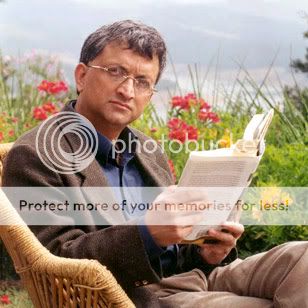
Ramachandra Guha (Winner of Sahitya Akademi Award 2011 for English)

A jury representing the 23 Indian languages chose the winners of the prestigious Sahitya Akademi Awards this year. Under the chairmanship of the Akademi President, Sunil Gangopadhyay the awards winners chosen by the jury were approved by the Executive Board of the Sahitya Akademi. Ramachandra Guha(English), for his narrative history, was among the winners of Sahitya Akademi Awards 2011.

Among the novelists were:
Baldev Singh (Punjabi)
Gopalakrishna Pai (Kannada)
Kashinath Singh (Hindi)
Kshetri Bira (Manipuri)
Kalpanakumari Devi (Odia)
Atul Kanakk (Rajasthani)

The poets included in the winners list were:
Late Kabin Phukan (Assamese)
Manindra Gupta (Bengali)
Premananda Mosahari (Bodo)
Naseem Shafaie (Kashmiri)
Melvyn Rodrigues (Konkani)
Harekrishna Satapathy (Sanskrit)
Aditya Kumar Mandi (Santali)
Khaleel Mamoon (Urdu)

For their books on essays Lalit Magotra (Dogri), Grace (Marathi) and Samala Sadasiva (Telugu) received the award.

Tomas Transtromer Wins 2011 Nobel Prize in Literature


Tomas Transtromer
The latest news from Stockholm is that the 2011 Nobel Prize in Literature has been awarded to a Swedish poet, Tomas Transtromer. He is the one whose surrealistic poetry won him accolades as a very important Scandinavian writer since the time of Second World War. His works revolved around the mysteries of the human mind. According to the Swedish Academy, the works of this poet were recognized “because through his condensed, translucent images, he gives us fresh access to reality.” Transtromer has continued to writer despite his odds. In the year 1990, he suffered from a stroke because of which he was half-paralyzed and was unable to speak. Continuing to write after that, Transtromer got his collection of poems published ‘The Great Enigma’. ‘Windows and Stones’, published in the year 1966, which depicts the themes drawn from his various travels and ‘Baltics’, published in the year 1974 are considered his most famous works. Till now his works have been translated into more than fifty languages across the globe and he has influenced poets far and wide, especially in North America.

 Apart from being a poet, he is also a psychologist, having earned his degree in psychology from Stockholm University. He was born in Stockholm in 1931. His childhood was spent with his mother, who was a teacher. She had divorced his father, who was a journalist. Transtromer started writing poetry when he was in school and brought out his first collection ‘Seventeen Poems’ at the age of twenty-three.

Nobel Prize in Literature 2011: Top 4 Contenders

Less than twenty four hours before the final announcement of the Nobel Prize for Literature 2011 there were a lot of ups and downs in the chances of the finalists winning the most-coveted literary honour. Bob Dylan was being considered the surprise dark horse, who had beaten the odds 100/1 to reach the odds 10/1 and finally to 5/1. He was among the four top candidates for 2011 Nobel Prize for Literature.


#1 BOB DYLAN: He is an American singer-songwriter, poet and a musician. Within the span of 24 hours he reached the top position in the final choices for the Nobel Prize for Literature 2011. His rising to this position may have been surprising for many but he had many feathers in his cap that recommended him for this prize. He has to his credit many published book including ‘Chronicles Volume One’, ‘Tarantula’ and ‘Lyrics: 1962-2001’. Many of his songs like ‘Blowin’ in the Wind’, ‘The Times they are a-changin’, ‘Knockin’ on Heaven’s Door’ reached the level of becoming anthems for civil right and anti-war movement in the United States.


#2 ADONIS: The real name of Adonis is Ali Ahmad Said Asbar, an 81-year-old Syrian poet. Although his position was second, yet he is the most favoured one. One of the reasons for his being a favourite is that he writes in Arabic, a language that in underrepresented because we have only one other Nobel Prize winner, Naguib Mahfouz, who wrote in Arabic.


#3 HARUKI MURAKAMI: Haruki Murakami is a Japanese novelist. Till date only two Japanese writers have won the Nobel Prize in Literature: Kenzaburo Oe in the year 1994 and Yasunari Kawabata in the year 1968. Murakami’s novels are based on characters who defy the group mentality that dominates the Japanese culture.


#4 TOMAS TRANSTROMER: He is one of the leading poets of Sweden. This 80-year old poet is famous for his multi-faceted poetry that is characterised by subtlety.
Let us wait and watch who wins the race!!!

Another prize for Rohinton Mistry's 'A Fine Balance'

Rohinton Mistry
Rohinton Mistry's much talked about novel 'A Fine Balance' is in news once again. The book has won the 2012 Neustadt International Prize for Literature. The Indo-Canadian author, Rohinton Mistry had earlier won the Scotiabank Giller Prize for the same book. 'A Fine Balance' was also chosen for Oprah’s Book Club in 2001. Mistry's novel 'Family Matters' received the Timothy Findley Award from the Writers’ Trust of Canada. 'Such a Long Journey', Rohinton Mistry's first novel had won the Commonwealth Writers’ Prize and the Governor General’s Award. Three of the writer's novels have also been nominated for the Man Booker Prize.

'A Fine Balance' has been called 'a masterpiece of illumination and grace'. It 'like all great fiction, transforms our understanding of life', according to Guardian.
I had reviewed this book for 'Literary Jewels' in the year 2007. You can read the review here: 'A FINE BALANCE'.

Winners of Nobel Prize for Literature


The winner of the much awaited Nobel Prize for Literature 2011 will be announced on Thursday 6 October, 1:00 p.m. CET. The list of the previous winners of Nobel Prize for Literature from 1901 to 2010 is as follows:

2010 Mario Vargas Llosa
2009 Herta Müller
2008 Jean-Marie Gustave Le Clézio
2007 Doris Lessing
2006 Orhan Pamuk
2005 Harold Pinter
2004 Elfriede Jelinek
2003 John M. Coetzee
2002 Imre Kertész
2001 Sir Vidiadhar Surajprasad Naipaul
2000 Gao Xingjian
1999 Günter Grass
1998 José Saramago
1997 Dario Fo
1996 Wislawa Szymborska
1995 Seamus Heaney
1994 Kenzaburo Oe
1993 Toni Morrison
1992 Derek Walcott
1991 Nadine Gordimer
1990 Octavio Paz
1989 Camilo José Cela
1988 Naguib Mahfouz
1987 Joseph Brodsky
1986 Wole Soyinka
1985 Claude Simon
1984 Jaroslav Seifert
1983 William Golding
1982 Gabriel García Márquez
1981 Elias Canetti
1980 Czeslaw Milosz
1979 Odysseus Elytis
1978 Isaac Bashevis Singer
1977 Vicente Aleixandre
1976 Saul Bellow
1975 Eugenio Montale
1974 Eyvind Johnson, Harry Martinson
1973 Patrick White
1972 Heinrich Böll
1971 Pablo Neruda
1970 Aleksandr Isayevich Solzhenitsyn
1969 Samuel Beckett
1968 Yasunari Kawabata
1967 Miguel Angel Asturias
1966 Shmuel Yosef Agnon, Nelly Sachs
1965 Mikhail Aleksandrovich Sholokhov
1964 Jean-Paul Sartre
1963 Giorgos Seferis
1962 John Steinbeck
1961 Ivo Andric
1960 Saint-John Perse
1959 Salvatore Quasimodo
1958 Boris Leonidovich Pasternak
1957 Albert Camus
1956 Juan Ramón Jiménez
1955 Halldór Kiljan Laxness
1954 Ernest Miller Hemingway
1953 Sir Winston Leonard Spencer Churchill
1952 François Mauriac
1951 Pär Fabian Lagerkvist
1950 Earl (Bertrand Arthur William) Russell
1949 William Faulkner
1948 Thomas Stearns Eliot
1947 André Paul Guillaume Gide
1946 Hermann Hesse
1945 Gabriela Mistral
1944 Johannes Vilhelm Jensen
1943 No Nobel Prize was awarded this year. The prize money was with 1/3 allocated to the Main Fund and with 2/3 to the Special Fund of this prize section.
1942 No Nobel Prize was awarded this year. The prize money was with 1/3 allocated to the Main Fund and with 2/3 to the Special Fund of this prize section.
1941 No Nobel Prize was awarded this year. The prize money was with 1/3 allocated to the Main Fund and with 2/3 to the Special Fund of this prize section.
1940 No Nobel Prize was awarded this year. The prize money was with 1/3 allocated to the Main Fund and with 2/3 to the Special Fund of this prize section.
1939 Frans Eemil Sillanpää
1938 Pearl Buck
1937 Roger Martin du Gard
1936 Eugene Gladstone O'Neill
1935 No Nobel Prize was awarded this year. The prize money was with 1/3 allocated to the Main Fund and with 2/3 to the Special Fund of this prize section.
1934 Luigi Pirandello
1933 Ivan Alekseyevich Bunin
1932 John Galsworthy
1931 Erik Axel Karlfeldt
1930 Sinclair Lewis
1929 Thomas Mann
1928 Sigrid Undset
1927 Henri Bergson
1926 Grazia Deledda
1925 George Bernard Shaw
1924 Wladyslaw Stanislaw Reymont
1923 William Butler Yeats
1922 Jacinto Benavente
1921 Anatole France
1920 Knut Pedersen Hamsun
1919 Carl Friedrich Georg Spitteler
1918 No Nobel Prize was awarded in the year 1918 as the prize money was allocated to the Special Fund of this prize section.
1917 Karl Adolph Gjellerup, Henrik Pontoppidan
1916 Carl Gustaf Verner von Heidenstam
1915 Romain Rolland
1914 No Nobel Prize was awarded in the year 1914 as the prize money was allocated to the Special Fund of this prize section.
1913 Rabindranath Tagore
1912 Gerhart Johann Robert Hauptmann
1911 Count Maurice (Mooris) Polidore Marie Bernhard Maeterlinck
1910 Paul Johann Ludwig Heyse
1909 Selma Ottilia Lovisa Lagerlöf
1908 Rudolf Christoph Eucken
1907 Rudyard Kipling
1906 Giosuè Carducci
1905 Henryk Sienkiewicz
1904 Frédéric Mistral, José Echegaray y Eizaguirre
1903 Bjørnstjerne Martinus Bjørnson
1902 Christian Matthias Theodor Mommsen
1901 Sully Prudhomme

Pulitzer Prize Winners - 2011


The names of the winners of the Pulitzer Prize 2011 have been announced. This US award is given in the following categories:
• Public Service
• Breaking News Reporting
• Investigative Reporting
• Explanatory Reporting
• Local Reporting
• National Reporting – for a distinguished example of newspaper reporting on national affairs
• International Reporting
• Feature Writing
• Commentary – for distinguished commentary
• Criticism
• Editorial Writing
• Editorial Cartooning
• Breaking News Photography, previously called Spot News Photography
• Feature Photography

and also includes six categories in letters and drama:

• Fiction
• Drama
• History
• Biography or Autobiography
• Poetry
• General Non-Fiction

LITERARY JEWELS, being a creative insight into the world of literature, I'll mention only the awards conferred upon various authors in the literary category.

PULITZER PRIZE WINNERS 2011 in the literary categories are as under:

FICTION - "A Visit from the Goon Squad" by Jennifer Egan (Alfred A. Knopf)


DRAMA - "Clybourne Park" by Bruce Norris

HISTORY - "The Fiery Trial: Abraham Lincoln and American Slavery" by Eric Foner (W. W. Norton & Company)

BIOGRAPHY - "Washington: A Life" by Ron Chernow (The Penguin Press)

POETRY - "The Best of It: New and Selected Poems" by Kay Ryan (Grove Press)

GENERAL NON-FICTION - "The Emperor of All Maladies: A Biography of Cancer" by Siddhartha Mukherjee (Scribner)

John le Carré turns down Man Booker International Prize 2011 nomination

John le Carré
In a twist to the announcement of the shortlisted authors for the coveted Man Booker International Prize, the celebrated UK author, John le Carré (famous for his mastery over espionage fiction), has asked for his name to be removed from the list. In the true spirit of writing he declared that he didn’t write to compete for literary awards. Having written more than 20 books, Le Carré is the author, who takes the credit of defining the spy genre both in the field of films and fiction. Among his most famous creations are: ‘The Spy who came in from the Cold’ and ‘The Constant Gardener’.
John le Carré was among the 13 authors shortlisted for the Man Booker International Prize 2011, an award that is presented to an author for his lifetime achievements and not just for one book. The Man Booker International Prize (presented after every two years) is different from the Man Booker for Fiction that is awarded every year to one particular book.
This is what Le Carré had to say, “I am enormously flattered to be named as a finalist of the 2011 Man Booker International Prize. However, I do not compete for literary prizes and have therefore asked for my name to be withdrawn.” But Le  Carré’s request was with due respect politely rejected by the chairman of the judging panel, Rick Gekoski.

Man Booker Prize 2011 - SHORTLISTED AUTHORS

Known as ‘the Olympics of literature’, the Man Booker Prize is one of the most prestigious awards. It will be announced on 18 May at the Sydney Writers’ Festival. The shortlist for the Man Booker International Prize has been announced. Among the competitors this year are Anne Tyler, John le Carré, Philip Roth and Philip Pullman. Deciding the deserving winner of this £60,000 prize is challenging task for the judging panel.

Rick Gekoski, chair of the judging panel remarked, "You read all of them in depth, then you talk a lot, then you think, and read some more. Then you decide which one you wish to honour, and why. It is a question of slow comparison and contrast, and a winner eventually emerges."

The following are the thirteen shortlisted authors this year:  
 <><><><><>  <><><><><> 
Juan Goytisolo from Spain
John le Carré from UK
Philip Pullman from UK
David Malouf from Australia
Anne Tyler from USA
Wang Anyi from China

Amin Maalouf from Lebanon
Marilynne Robinson from USA
Dacia Maraini from Italy
Su Tong from China
James Kelman from UK
Rohinton Mistry from India
Philip Roth from USA
 

DSC Prize for South Asian Literature 2011

For the first time award was given at the Jaipur Literature Festival, DSC Prize for South Asian Literature. In January 2011, this US $ 50,000 award was conferred upon H.M. Naqvi for his novel ‘Home Boy’, published by Harper Collins India. The Chairperson of the Jury, Nilanjana S. Roy declared that while finalizing the shortlist when all the members of the jury argued about the merits of all the contenders they rediscovered the joys of reading. She said, “As we finalised our shortlist, the criteria that was uppermost in our minds was DSC’s mandate to look for the best and the most interesting examples of the contemporary novel set in, or about, South Asia.”
The following novels were shortlisted for the prize:
• Amit Chaudhuri’s The Immortals (Picador India)
• Tania James’ ‘Atlas of Unknowns (Pocket Books)
• Musharraf Ali Farooqi’s ‘The Story of a Widow (Picador India)
• Manju Kapur’s ‘The Immigrant’ (Faber & Faber)
• Neel Mukherjee’s ‘A Life Apart’ (Constable & Robinson)
• H.M. Naqvi’s ‘Home Boy’ (Harper Collins India)

Apart from those mentioned above the other novels included in the longlist in the previous round were:
• Upamanyu Chatterjee’s ‘Way to Go’ (Penguin)
• Chandrahas Choudhury’s ‘Arzee the Dwarf’ (Harper Collins)
• Ru Freeman’s ‘A Disobedient Girl’ (Penguin/Viking)
• Anjum Hassan’s ‘Neti Neti’ (IndiaInk/Roli Books)
• Daniyal Mueenuddin’s ‘In Other Rooms, Other Wonders’ (Bloomsbury)
• Salma’s ‘The Hour Past Midnight’ (Zubaan, translated by Lakshmi Holmstrom)
• Sankar’s ‘The Middleman’ (Penguin, translated by Arunava Sinha)
• Ali Sethi’s ‘The Wish Maker’ (Penguin)
• Jaspreet Singh’s ‘Chef’ (Bloomsbury)
• Aatish Taseer’s ‘The Temple Goers’ (Penguin/Viking)


Special Prize: The Man Booker Best of Beryl

Dame Beryl (1932 - 2010)

Dame Beryl, who missed out on the prestigious Man Booker Prize for which she was shortlisted five times, will finally get recognized in 2011for her contribution to literature. One of her five novels would be receiving a special prize, The Man Booker Best of Beryl. The winner will be decided through voting by the readers.
“Dame Beryl was a very gracious non-winner and no Man Booker dinner was complete without her. She may have been the eternal Booker Bridesmaid but, with this special prize created in her honour, we are delighted to be able finally to crown her a Booker Bride by letting the public choose what they believe to be the best of her books”, said Ion Trewin, the prize’s literary director. (Courtesy: The Press Association)

The list of books that were shortlisted for the Man Booker Prize earlier are as follows:
• The Dressmaker (1973)
• The Bottle Factory Outing (1974)
• An Awfully Big Adventure (1990)
• Every Man for Himself (1996)
• Master Georgie (1988)

Man Booker Prize 2009


Man Booker Prize for the year 2009 has been won by Hilary Mantel for her book ‘Wolf Hall’. The book deals with the fictionalized life of Thomas Cromwell. It is set in 1520s, related to Cromwell’s rise to power in the Tudor court of King Henry VIII. The book has been a favourite ever since the release of the shortlisted entries.The other shortlisted authors were:

# A.S. Byatt for ‘The Children’s Book’
# J.M. Coetzee for ‘Summertime’
# Adam Foulds’ ‘The Quickening Maze’
# Simon Mawer’s ‘The Glass Room’
# Sarah Waters’ ‘The Little Stranger’

Plot Dog top 5 - contest dated December 26

My article was selected among top five in non-fiction category: “The Yardsticks of Life - Success and Failure”
All the selected entries in various categories are as follows:

POETRY
Khaye Cardenas - “The Woman’s Silent Prayer” - Every woman’s silent prayer.
Dragon Blogger - “Two Sides To Every Tale”- Poem about a man being wrongly accused and sentenced.
Dragon Blogger - “Why Does Mommy Cry?” - Emotional poem about parents fighting from the mind of a child.
Daisy Bookworm - “Breath” - A poem detailing the evils of wearing real, steel boned corsets for a woman.
exquisite corpse“Great Is The Morning” – Collaborative Poetry.

PROSE
FICTION

Jenn - “Worlds Apart (Chapter One)” - The first chapter of a multi-part story about a relationship doomed by the time in which it occurred.
Jennifer M Scott - “Dear God” - a woman writes a letter to god asking for her death.

OPINION / NON-FICTION / NON-FICTION RANT

Harneet Singh - “Life with an Aim” - Today people are becoming more materialistic. They attach their aim of life with the materialistic things.
Amritbir Kaur - “The Yardsticks of Life - Success and Failure” - Is life measurable? Can we divide it into watertight compartments of success and failure? Find answers to these and much more…

ABOUT WRITING

Khaye Cardenas “Please Excuse Me I Am Writing Again” - The writer talks about the things that keep her from writing.

The results are also available at: Plot Dog